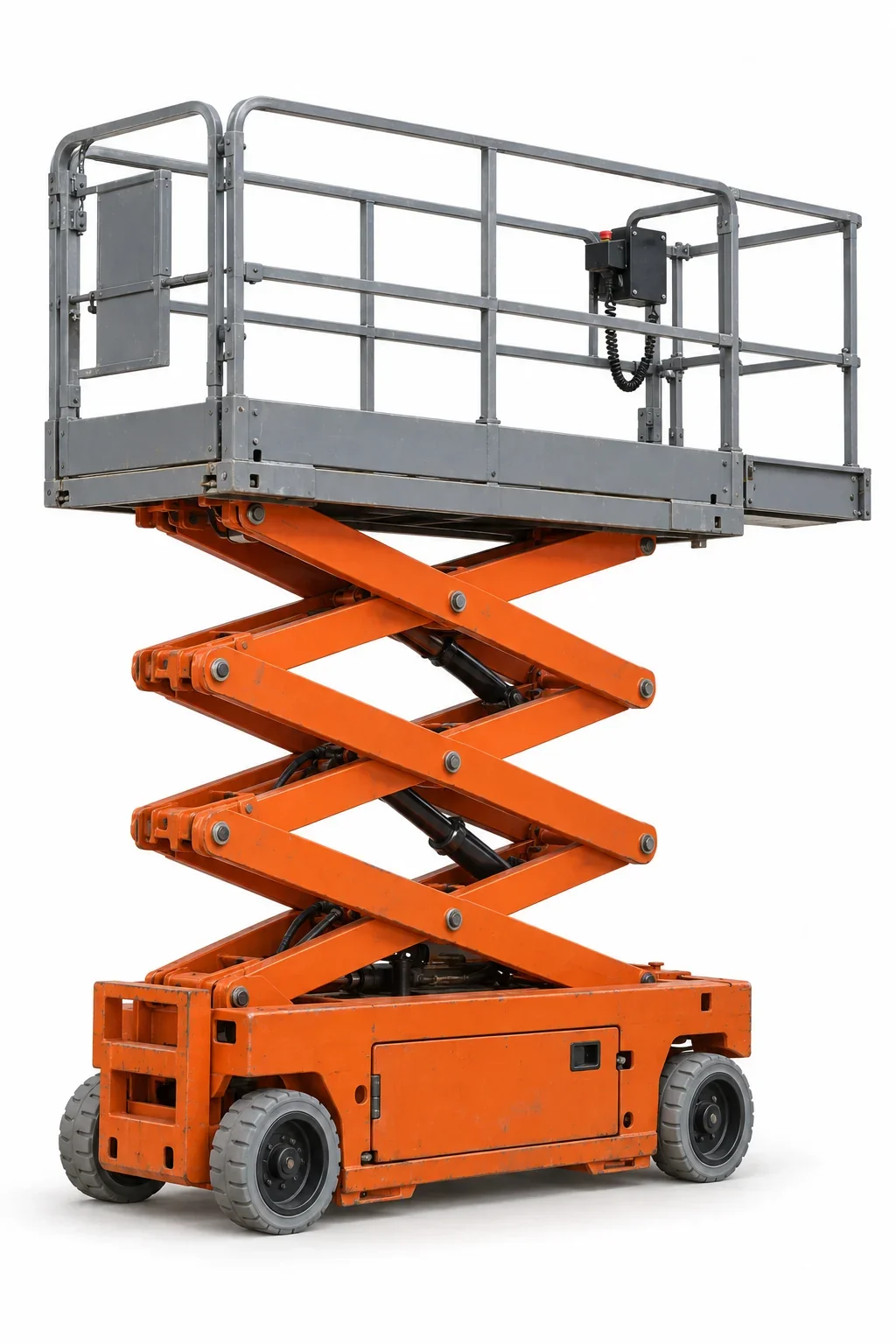
Match platform geometry to the task
- Choose platform height to clear work while keeping tools within guardrails.
- Wider decks support trades working side‑by‑side on glazing, canopies, or signage.
- If you must reach over setbacks or landscaping, compare booms instead: /boom-lift-rental/
Tampa surfaces and weather
- Sandy soil around new pads can shift under load, particularly after rain. Units with high‑flotation tires and oscillating axles handle ruts and soft patches better on firmed ground.
- Coastal humidity and salt air call for corrosion‑resistant hardware and planned cleaning. Exposed fasteners and electrical connectors benefit from regular inspection per unit guidance.
- Seasonal rainfall raises standing water and mud; ground clearance and approach angles matter when crossing swales or unfinished grades.
Stabilization and grade considerations
Rough‑terrain scissor lifts specify allowable slope, and some include outriggers or leveling features. Evaluate: - The maximum permitted grade where the machine will travel - The firmness of staging pads near facade lines or canopies - Wind exposure on open lots versus shielded courtyards
When a different lift fits better
- Need up‑and‑over access across soft ground? See /aerial-lift-rental/ for boom options.
- Tight indoor‑outdoor transitions on finished slabs may favor slab electrics: /electric-scissor-lift-rental/
Actual site conditions, the selected unit’s instructions, and site procedures govern exterior elevated work.